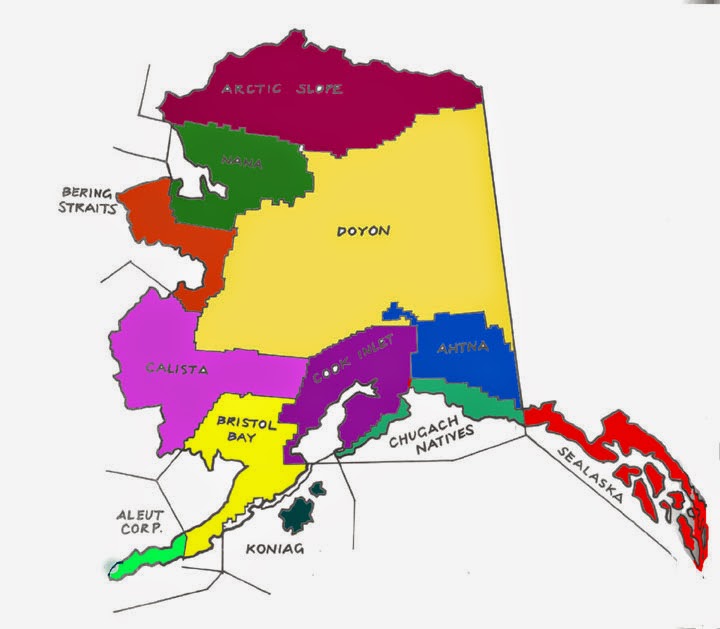
The Native American and Indigenous Studies Association (NAISA) 2015 Annual Meeting takes place from June 4-6 in Washington, DC, brought to life hosted by the National Congress of American Indians and other regional institutions. This year there are panels dedicated to Alaska Native Studies with other Alaska Native studies scholars in mixed panels. As 40 percent of the nation's tribes, I'm thrilled to see at all this work at the conference this year. Alaska specific things bolded, below. There maybe more, so we'll see.
2:00 PM – 3:45 PM Friday June 5
4:00 to 5:45 pm
Hyatt Regency: Redwood Chair:
Thomas Michael Swensen, Colorado State University Participants:
“Propatriation: Tlingit Arts in the NAGPRA Era” Emily Moore, Colorado State University
“Arts and Oral Traditions: Engaging “Storywork” in Higher Education” Beth Leonard, University of
Alaska Fairbanks
“Uncovering a History of Art and Violence through Susie Silook’s The Anti-Depression Uliimaaq.”
Thomas Michael Swensen, Colorado State University
Thursday June 4
111. Indigenous Natural law and Natural Resource Governance: Theoretical and Empirical
Perspectives
Panel
2:00 to 3:45 pm
Hyatt Regency: Concord
Chair:
Panel
2:00 to 3:45 pm
Hyatt Regency: Concord
Chair:
TBD
Participants:
Establishing Indigenous Natural Law through Indigenous Ontology & Epistemology Molly Sparhawk, University of Alaska Fairbanks
Re-examining Treaty through Nêhiyaw pimâcihowin (Plains Cree Way of Life): Paulina Reghan
Johnson, Western University
Uncovering the Doctrine of Mana Moana to Better Articulate Maori rights to Water Victoria Skelton,
University of Auckland
Changing corporate culture: Indigenous influence on extractive companies via negotiated agreements
Julia Keenan, The University of Queensland
Participants:
Establishing Indigenous Natural Law through Indigenous Ontology & Epistemology Molly Sparhawk, University of Alaska Fairbanks
Re-examining Treaty through Nêhiyaw pimâcihowin (Plains Cree Way of Life): Paulina Reghan
Johnson, Western University
Uncovering the Doctrine of Mana Moana to Better Articulate Maori rights to Water Victoria Skelton,
University of Auckland
Changing corporate culture: Indigenous influence on extractive companies via negotiated agreements
Julia Keenan, The University of Queensland
Saturday June 6
10:00 AM – 11:45 AM Saturday June 6
158. Ecological Knowledge and Imagination
Paper Session
10:00 to 11:45 am
Hyatt Regency: Yellowstone Chair:
Nancy Van Styvendale, University of Saskatchewan Participants:
"I’m Gonna Buy Me an Island": Road Development and Environmental Criticism in Tomson Highway’s The Rez Sisters Cameron Paul, Univerity of British Columbia
Decolonizing Dispossession: Rethinking Adivasi Land Relations in a Decolonial-Feminist Frame Padini Nirmal, Clark University
Indigenous Knowledge, Oral History and Place: Collaborative Research in a Northern Northwest community Judith D Ramos, University of Alaska, Fairbanks
Views from the End of the World: Conservation Ethics in Leslie Marmon Silko’s Almanac of the Dead and Cormac McCarthy’s The Road Virginia Kennedy, PhD, Otsego Land Trust
Paper Session
10:00 to 11:45 am
Hyatt Regency: Yellowstone Chair:
Nancy Van Styvendale, University of Saskatchewan Participants:
"I’m Gonna Buy Me an Island": Road Development and Environmental Criticism in Tomson Highway’s The Rez Sisters Cameron Paul, Univerity of British Columbia
Decolonizing Dispossession: Rethinking Adivasi Land Relations in a Decolonial-Feminist Frame Padini Nirmal, Clark University
Indigenous Knowledge, Oral History and Place: Collaborative Research in a Northern Northwest community Judith D Ramos, University of Alaska, Fairbanks
Views from the End of the World: Conservation Ethics in Leslie Marmon Silko’s Almanac of the Dead and Cormac McCarthy’s The Road Virginia Kennedy, PhD, Otsego Land Trust

2:00 PM – 3:45 AM Saturday June 6
162. Modernizing the Trust for Self-Determination: A Policy Forum on Indigenous Education in the U.S.
Roundtable
Roundtable
2:00 to 3:45 pm
Hyatt Regency: Columbia C Chair:
TBD
Presenters:Malia Villegas, National Congress of American IndiansWilliam Mendoza, White House Initiative on American Indian and Alaska Native Education Carrie Billy, American Indian Higher Education ConsortiumBrian McKinley Jones Brayboy, Arizona State University
Hyatt Regency: Columbia C Chair:
TBD
Presenters:Malia Villegas, National Congress of American IndiansWilliam Mendoza, White House Initiative on American Indian and Alaska Native Education Carrie Billy, American Indian Higher Education ConsortiumBrian McKinley Jones Brayboy, Arizona State University
2:00-3:45 Saturday June 6
164. Resisting Boundaries
Paper Session
2:00 to 3:45 pm
Hyatt Regency: Congressional D Chair:
Dina Gilio-Whitaker, Center for World Indigenous Studies Participants:
Beading and Walking Sovereignty: Dene Resurgence against Canadian Sovereignty Kelsey Wrightson, University of British Columbia
Indigenous Nations Challenging Transnationalism: Anishinaabe Narratives Crossing and Creating Borders in Northern Minnesota Nicholas Cragoe, University of Illinois at Urbana-Champaign
Indigenous (Im)Mobility and the Borderlands of North America Levin Arnsperger, Emory University Between Empires and Frontiers: Alaska Native Sovereignty, Statehood, and U.S. Settler Imperialism
Jessica Leslie Arnett, University of Minnesota
Paper Session
2:00 to 3:45 pm
Hyatt Regency: Congressional D Chair:
Dina Gilio-Whitaker, Center for World Indigenous Studies Participants:
Beading and Walking Sovereignty: Dene Resurgence against Canadian Sovereignty Kelsey Wrightson, University of British Columbia
Indigenous Nations Challenging Transnationalism: Anishinaabe Narratives Crossing and Creating Borders in Northern Minnesota Nicholas Cragoe, University of Illinois at Urbana-Champaign
Indigenous (Im)Mobility and the Borderlands of North America Levin Arnsperger, Emory University Between Empires and Frontiers: Alaska Native Sovereignty, Statehood, and U.S. Settler Imperialism
Jessica Leslie Arnett, University of Minnesota
4:00 PM – 5:45 Saturday June 6
176. Diasporic Times: Complicating Space-Based Approaches to Native American and Indigenous Diasporas
Panel
4:00 to 5:45 pm
Hyatt Regency: Bryce
Chair:
TBD
Participants:
Will Rogers’ Occupations: Temporal Diaspora through Performance Bethany Hughes, Northwestern
University
Remembering Aleut Internment in World War II Alaska Holly Guise, Yale University
Eradication Nation: Disrupting the Time of Settler-Colonialism in Simon Ortiz’s From Sand Creek and Sherwin Bitsui’s Flood Song Christopher Pexa, Cornell University
“A Meeting Place for All”: Cultural Production and Embodied Resistance at Haskell’s 1926
Homecoming and Powwow Beth Eby, University of Illinois at Urbana-Champaign
Comment:
Jeane Breinig, University of Alaska, Anchorage
176. Diasporic Times: Complicating Space-Based Approaches to Native American and Indigenous Diasporas
Panel
4:00 to 5:45 pm
Hyatt Regency: Bryce
Chair:
TBD
Participants:
Will Rogers’ Occupations: Temporal Diaspora through Performance Bethany Hughes, Northwestern
University
Remembering Aleut Internment in World War II Alaska Holly Guise, Yale University
Eradication Nation: Disrupting the Time of Settler-Colonialism in Simon Ortiz’s From Sand Creek and Sherwin Bitsui’s Flood Song Christopher Pexa, Cornell University
“A Meeting Place for All”: Cultural Production and Embodied Resistance at Haskell’s 1926
Homecoming and Powwow Beth Eby, University of Illinois at Urbana-Champaign
Comment:
Jeane Breinig, University of Alaska, Anchorage